What Happens to Your Cascais Property When You're Away?
By Matthew Rowley · Updated October 2026
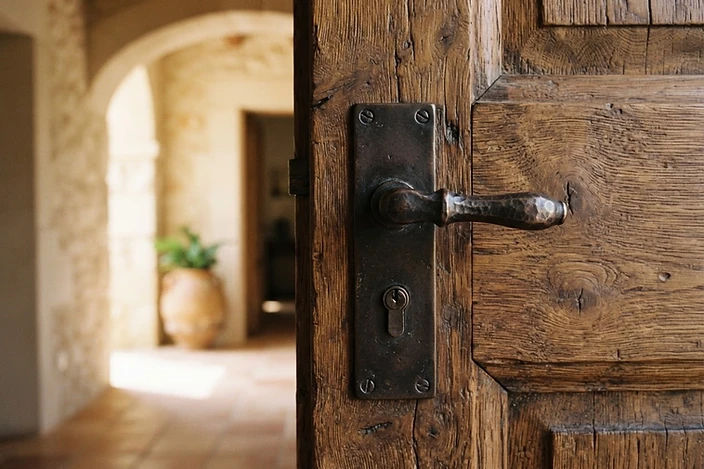
Most damage in an empty home starts small, such as a slow leak, a blocked gutter or a pump that stops, and becomes expensive only because nobody sees it.
On the Cascais coast, damp winters, salt air and Atlantic storms add risks of their own.
Regular, recorded visits by someone local catch problems while they are still minor.
A property that is properly looked after is also ready on the day you arrive.
Most owners don't think much about their property between visits — until something goes wrong. A water leak that runs for days before anyone notices. A storm that damages a roof tile, left unrepaired until it lets water in properly. Post and deliveries accumulating, making it increasingly obvious that nobody has been at the property for some time. None of these are dramatic on their own. Left long enough, any of them can become expensive.
What actually goes wrong in an empty home?
The problems are rarely unusual. They are the ordinary failures every house has, made worse by time:
- Water. A dripping tap, a failed seal under a sink, a burst pipe or a cistern that won't stop running. In an occupied home someone notices within hours; in an empty one it can run for weeks.
- Power. A storm trips the electrics, and with them the fridge, the freezer, the alarm or the pool pump. Nobody resets them.
- Roofs and gutters. Leaves and debris block gutters in autumn, and the first heavy rain finds its way inside.
- Outside spaces. Gardens overgrow, pools turn green when the filtration stops, and gates and shutters seize.
- Signs of absence. Uncollected post, closed shutters for months and an untended garden all make it obvious that nobody is home.
If your property is left unoccupied for extended periods, it is also worth checking the terms of your home insurance. Some policies impose additional conditions during longer periods of absence.
The Cascais climate and a closed-up house
Living between the Atlantic and the Sintra hills is a large part of the area's appeal, but the climate asks more of a closed-up house than many owners expect.
Winters are damp, and a property with its windows shut for months traps that moisture. Mould appears in wardrobes, on mattresses and behind furniture, and once it is established it is hard to remove. Ventilation and, where needed, dehumidifiers make a real difference. Towards Sintra, where mist and humidity are more pronounced, this matters even more.
Salt air near the coast corrodes exposed metal — gates, railings, outdoor lighting and air-conditioning units — faster than owners from drier climates tend to expect. And autumn and winter storms bring wind-driven rain that tests every roof, window seal and terrace drain.
Why small problems become expensive
The properties where these problems are caught early aren't necessarily the ones with the most expensive security systems — they're the ones somebody is actually checking. A short, regular visit can catch many of the small issues that otherwise go unnoticed: a dripping tap, a failing pump, a gate that's stopped closing properly, mail that needs forwarding. It's unglamorous work, and that's rather the point — the goal is that nothing dramatic ever happens at all.
What does a proper property check involve?
A useful visit is more than a glance through the front door. Depending on the property and the agreed service, it may include:
- walking through every room, checking ceilings, walls and floors for any sign of water or damp;
- running taps, flushing toilets and checking under sinks and around water heaters;
- confirming that the electrics, alarm, fridge and any pumps are working;
- opening windows to air the property, and checking shutters, locks and doors;
- looking over the garden, pool, terraces, gates and drains;
- collecting post and dealing with anything that needs attention;
- recording what was found, with photographs, and reporting it back to you.
When something does need fixing, the second half of the job is getting the right person there promptly and making sure the work is done properly, without you having to manage it from another country.
Bills, post and paperwork
An empty property still produces paperwork. Utility bills, property tax (IMI) notices and, for apartments, condominium correspondence keep arriving, usually in Portuguese. A failed direct debit can lead to a supply being suspended. A missed condominium notice can mean decisions about shared repairs are taken without you. Having someone local deal with the post, keep an eye on the regular property administration and flag anything that needs your attention stops all of this from quietly building up.
Coming home to a house that's ready
There's also the return visit to think about. Arriving at a cold, stale property after months away, with a list of small jobs waiting, isn't how a second home should feel. The alternative — heating on, the fridge stocked if you'd like it, everything checked and ready — comes from someone having been there recently, on your behalf, with your arrival already in mind.
How Property Care helps
This is what Property Care is built to do: regular inspections with photo reporting, key holding so access is never delayed, bill payment so nothing lapses, contractor coordination when something needs attention, and homecoming preparation so the property is ready when you are. You have one accountable point of contact for all of it, based in Cascais.
Every property is different.
Every owner is different.
Let's start with a conversation. No obligation, no pressure — simply an honest discussion about your property and how it might be cared for.